Skip to main content
Benefits of Smoke-Free Homes and Cars
- Protect your family, including pets, from secondhand smoke.
- Reduce fire risk.
- Maintain your property’s value and reduce cleaning costs.
What’s the problem with smoking in your home and car?
- There is no safe level of secondhand smoke.
- Children, the elderly, people with disabilities and pregnant women are particularly vulnerable to the health risks associated with secondhand smoke.1
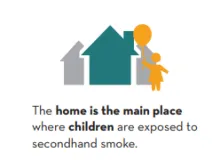
- 2 out of 5 children are exposed to secondhand smoke. Most children are exposed in the home.2
- Children exposed to tobacco smoke are at risk for asthma, lung problems, earaches and Sudden Infant Death Syndrome (SIDS).1
- Adults are at risk for heart disease, stroke and lung cancer.2
- Thirdhand smoke is the residue left behind from cigarette smoke and cannot be removed through normal cleaning methods.
- It contains 250 chemicals and sticks to dust, carpets, upholstery, walls, hair, clothes, pets’ fur and feathers. The toxic chemicals left behind can re-emit and off gas back into the air. It cannot be removed through routine cleaning methods and can remain months after smoking has stopped.3,4
- Most fire deaths at home are caused by cigarettes. Smoke-free buildings reduce the risk, costs and liability associated with fires.5
What can you do?
- Talk to your family about smoke-free homes and cars.
- Don’t allow smoking or vaping in your home or car.
- To protect your family from thirdhand smoke, never smoke inside your home or car, even when they are not present.
- Sign a pledge to maintain a smoke and vape-free home. Have your family do the same.
- If visitors or someone in the home smokes, designate an area outdoors where they can smoke. Ideally, people should not smoke or vape within 25 feet from your home.
- Remove ashtrays from your home.
- Use the resources on this page to learn more and to educate your family about smoke-free homes and cars.
Resources