
Family Safety: Three Step to be Prepared
Family Safety: Three Step to be Prepared




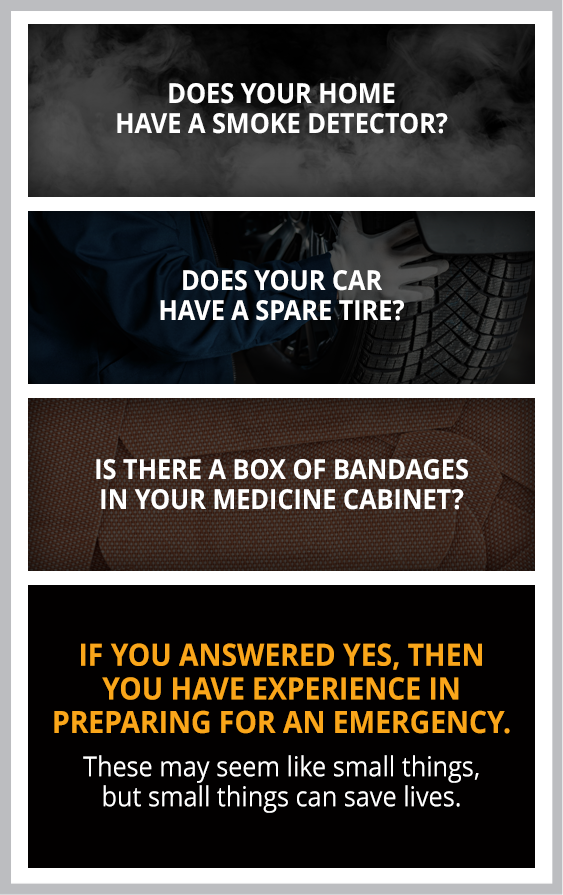
Emergencies happen. It can be a tornado, house fire, flood, or terrorist attack. No one wants to think about accidents or disasters. But being prepared for an emergency can help protect your family. The whole point of emergency preparation is to do as much as possible before an emergency happens. That's why we created the Ready in 3 information. It is a way to educate Missouri residents about being prepared for emergencies and encourage you to lead that process. We want you to share this information with family, friends, and neighbors. Working together, we can be prepared and save lives.
The most important thing to remember in an emergency is to stay calm. If something happens, try to get as much information about the situation as possible. Many of us rely on TV, the radio, or the Internet for news. But some emergencies might knock out the electricity, that is why it is important to have a battery-powered radio nearby.
READY IN 3: THREE STEPS TO PREPARE FOR AN EMERGENCY
Local, state, and federal agencies have plans to protect the public. But you are responsible for your own safety, even in an emergency. This information focuses on preparing you and your family.At home, school, work, and even in our cars, we need to know what to do in an emergency and where to go. The Missouri Department of Health and Senior Services developed a program called Ready in 3. It is an easy way to learn how to prepare for an emergency.
Ready in 3 includes three steps.
- Create a plan for you, your family, and your business.
- Prepare a kit for home, car, and work.
- Listen for information about what to do and where to go during an actual emergency.
STEP 1 - CREATE A PLAN
Develop an emergency plan for you and your family. Your family might not be together when an emergency happens. That's why it is important to have a plan in place. The entire family should know and understand the plan.
Talk about how you will reach each other in different situations. You might think about a couple of different plans. Planning for a tornado can be different than planning for a terrorist attack that involves poisonous chemicals.
Consider contacting the same friend or family member by phone or e-mail. Think about making an out-of-town family member or friend the contact. It might be easier to make a long-distance phone call instead of a local call during an emergency. It could be easier for an out-of-town person to connect separated family members.
Plan for two situations – staying home or leaving.
You should be prepared to stay in one place (like your house) or to evacuate. Deciding whether it is best to stay or go depends on the type of emergency. Officials may tell you what you need to do.
In some cases, limited communication and information may require you to decide what is best for you and your family.
- Watch TV or listen to the radio to get as much information as possible.
- Use common sense.
- Try to stay calm and keep your family calm.
Prepare a shelter at home.
Before an emergency, decide which room in your house will be safest if you have to stay. The room should be in the interior of the house. Pick a room with few windows and doors. There are a few things to keep in mind including:
- There should be enough space in the room for all family members and pets.
- Exterior doors to the house should be locked.
In an emergency where poisons are in the air, you may have to seal the room as best you can. This involves:
- Closing windows, air vents, and fireplace dampers.
- Turning off air conditioning, forced air heating systems, exhaust fans, and clothes dryers.
- If instructed, seal doors and air vents with heavy-duty plastic sheeting and heavy-duty tape.
- Keep emergency supplies in this room.
- Listen to the television or a battery-powered radio for information.
Know where to go if you have to leave.
Sometimes it may not be safe to stay in your home. Plan where family members can meet. Know where you will go and how you will get there.
- Plan several different routes in different directions.
- If you are driving, keep windows and vents closed, and air conditioning and heat off.
- Bring an emergency supply kit with you.
- If you can, bring your pets. However, many public shelters won't allow pets. Have a plan for your pet's care in case you can't bring your pet with you.
STEP 2 - PREPARE A KIT
If an emergency happens, you might not be able to get food or water for days or weeks, and your electricity may not be working.
Try to have three days' worth of food and fresh water for each person in your plan. You should have one gallon of water for each person for each day. If you have the room, you should store two weeks' worth of drinking water for each person.
But food and water aren't the only things you need to have on hand. The following items should be a part of your emergency kit. The kit should be kept in a container that can be easily carried in case you have to leave home. You could use a large bag, plastic container, or a trash can with a lid. You can find a more detailed emergency kit checklist at the end of this brochure.
Basic supplies
- Water and canned or dried food
- Battery-powered radio
- Flashlight
- Extra batteries for the radio and flashlight
- Prescription medicine
- First-aid kit
Car Supplies
Keep a small, portable emergency supply kit in your car at all times. In addition, you should include a small, personal supply kit with:
- A gallon of water
- Several cans of food and a manual can opener
- A sleeping bag or extra blanket
- Extra money
- First-aid supplies
STEP 3 - LISTEN FOR INFORMATION
It is important to stay calm in an emergency. Get as much information about the situation as possible. Many of us rely on TV, the radio, or the Internet for news. Some emergencies might knock out the electricity. Make sure to have a battery-powered radio with extra batteries.
City, county, and state officials have developed emergency plans. During an emergency, it is important to follow their instructions and advice. They will provide you with the latest information.
--SPECIAL SITUATION PLANNING--
Emergency planning if you have a child in school:
Many schools have their own emergency plans. Officials at your child's school should have current contact information for you and another family member. Make sure they have up-to-date work, home, and cell phone numbers. Give your e-mail address, if you have one.
It's important to ask your child's teacher or principal how they will contact parents in case of an
emergency. You should also know what steps will be taken to protect the children. Some questions you might consider asking include:
- How will you reach me if there's an emergency?
- Do you regularly practice fire, earthquake, tornado, and terrorism drills?
- Is there enough water and food stored at the school for all the children?
- What first-aid supplies are at the school?
- Are the teachers and administrators prepared to "shelter in place"?
- Do you have a plan to separate those students who may have been exposed to chemicals, bacteria, or viruses from others?
- Where will the students be taken if they must evacuate the school?
Emergency planning at work:
Your employer may have a building-evacuation plan. Some companies practice regular emergency-evacuation drills. There should be a meeting place outside your building where everyone can gather.
But don't rely on your employer for everything. Keep your own supply of fresh water and canned food at your desk or in your locker. A flashlight and battery-powered radio may also be helpful. Everyone should consider keeping a change of clothes at work. A pair of strong, practical shoes or boots should be included.
Emergency preparation for pets:
Make sure your pets have identification tags and up-to-date vaccinations. If you must leave home, bring your pet with you, if possible. You can plan ahead by creating a supply kit for your pet that includes extra food, water, and medicine. A carrier and leash will also be important. For cats, remember to include extra litter.
Emergency planning for people with special needs:
Senior citizens and disabled persons living in special-care facilities should review the building's emergency plans. Know where your medicines and special medical equipment are located in case you need to have
someone get it during an evacuation. Equipment such as wheelchairs, canes, or walkers should be labeled with your name.
People living at home who are disabled or have special medical needs should identify people who can help during an emergency. Make sure they know where you keep your emergency supplies. Give someone a key to your house or apartment.
Medical-alert tags or bracelets will help identify your disability if you need medical attention. If you need dialysis or another life-sustaining treatment, know the location of more than one facility. A supply kit for people with special needs should include the following additional items:
- A list of prescription and nonprescription medicines, including dosages
- A list of allergies
- Extra eyeglasses and hearing-aid batteries, if necessary
- Extra wheelchair batteries or other special equipment, if necessary
- A list of the brand/style and serial numbers of medical devices
- Copies of medical insurance and Medicare cards
- A list of doctors
- A list of emergency contacts and family
- Phone numbers of close neighbors who can help
PAT YOURSELF ON THE BACK — AND STAY ALERT
You've talked to your family and friends. Your plan is in place. Your emergency supply kit is stocked and ready. Be proud of the fact that you've taken the right steps to keep yourself and your family as safe as possible.
The final step is to remain alert. Review your plan regularly. Be sure to check your food, water, and medical supplies so that they stay fresh.
Remember – emergencies can affect anyone. But by being Ready in 3, you've made the decision to take
an active role in your safety and the safety of the ones you love.
EMERGENCY KIT CHECKLIST
Water
One gallon of water for each person per day, for a minimum of three days. If you have the room, you should store two weeks' worth of drinking water for each person. Remember to change your stored water supply every six months.
Canned or dried food
Include canned or dried foods that will not spoil. Remember to pack a can opener that does not need electricity.
- Ready-to-eat canned meats, fruits, and vegetables
- Protein or fruit bars
- Dry cereal or granola
- Peanut butter
- Dried fruit
- Nuts
- Crackers
- Canned juices
- Nonperishable, pasteurized milk
- Vitamins
- "Comfort" foods like chocolate and candy
Basic supplies
- Clean clothes and sturdy shoes for each person
- Rain gear
- Coats, hats, and gloves
- Sleeping bags or blankets
- An extra credit card and some money
- Extra set of keys for your car and house
- Battery-powered radio
- Flashlight
- Extra batteries
- Eating supplies such as paper plates, plastic forks and spoons, and napkins
- Tent
- Heavy-duty tape (duct tape, electrical tape)
- Scissors
- Heavy-duty trash bags or plastic sheets with ties
- Matches in a waterproof container
- Paper and pencil
- Needles and thread
- Toilet paper, moistened towelettes
- Liquid detergent
- Soap/deodorant/toothpaste
- Household chlorine bleach
- Plastic bucket with atight lid
- Disinfectant
- Prepaid, long-distance calling card
- A whistle to signal for help
Special items
- Prescription medicine
- Baby supplies such as diapers, formula, bottles
- Feminine hygiene supplies
- Extra eyeglasses or contact lenses
- Dental supplies
- Entertainment such as books, playing cards, and board games
- Important family documents stored in a waterproof container including identification, insurance information, bank account numbers, and birth certificates
- Pet supplies such as food, water, and identification
First-aid kit
- Adhesive bandages in different sizes
- Safety pins
- Soap
- Antibiotic ointment
- Latex gloves
- Washcloths
- Sunscreen
- Several 2-inch and 4-inch sterile gauze pads
- Several triangular bandages (3)
- 2-inch sterile roller bandages (3 rolls)
- 3-inch sterile roller bandages (3 rolls)
- Scissors
- Tweezers
- Needle
- Moistened towelettes
- Antiseptic
- Thermometer
- Petroleum jelly
- Over-the-counter pain relievers such as acetaminophen or ibuprofen
- Anti-diarrhea medicine
- Antacid
- Laxative
Car supplies
- Road maps
- Tire repair kit and pump
- Jumper cables
- Flares
- Flashlight
- Battery-powered radio
- Extra batteries for the flashlight and radio
- Fire extinguisher
- A gallon of water
- Several cans of food and a manual can opener
- A sleeping bag or extra blanket
- Extra money
- First-aid supplies
You can also view the Family Safety Guide information as a printable booklet (pdf), as well as checklists, factsheets and videos for other specific needs at our Ready in 3 Materials page https://health.mo.gov/emergencies/readyin3/materials.php