
Hyperthermia
Be Safe, Aware, And Prepared for Hot Weather
Find a Cooling Center
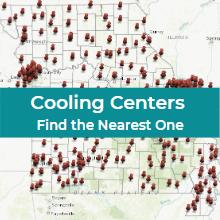
Locate nearest cooling centers in Missouri for a place to cool down. For overnight shelter, contact local emergency management or call United Way 2-1-1.
Protect Adults in Need
Report older adults and adults with disabilities in need of assistance due to hot temperatures. You can make a report 24/7 online or call the state's toll-free number 1-800-392-0210. Operators are available 7 a.m. to 8 p.m. seven days a week.
Community Resources
The toolkit includes a template response plan, resources, checklists, communications and best practices in responding to extreme heat.
Are you or someone you know in need of help with home utility costs? Visit the Department of Social Services’ Low Income Home Energy Assistance Program to learn more.
Each year many Missourians suffer from heat-related illnesses, with some cases resulting in death. During prolonged periods of high temperatures, using air conditioning – either at home or by seeking shelter in a local cooling center -- is the best preventive measure. Centers are not overnight shelters.
Missourians should become familiar with the terms used to identify heat hazards:
- Heat Wave is a prolonged period of excessive heat, often combined with excessive humidity.
- Heat Index is a number in degrees Fahrenheit (F) that tells how hot it feels when relative humidity is added to the air temperature. Exposure to full sunshine can increase the heat index by 15 degrees.
- Heat Cramps are muscle pains and spasms due to heavy exertion. Although heat cramps are the least severe, they are often the first signal that the body is having trouble with the heat.
- Heat Exhaustion typically occurs when people exercise heavily or work in a hot, humid place where body fluids are lost through heavy sweating. Blood flow to the skin increases, causing blood flow to decrease to the vital organs. This results in a form of mild shock. If not treated, the victim’s condition will worsen. Body temperature will keep rising and the victim may suffer heat stroke.
- Heat Stroke is a life-threatening condition. The victim’s temperature control system, which produces sweating to cool the body, stops working. The body temperature can rise so high that brain damage and death may result if the body is not cooled quickly.
- Sun Stroke is another term for heat stroke.
To prepare for extreme heat, you should consider:
- Install window air conditioners snugly; insulate spaces around the air condition for a tighter fit, if necessary.
- Check air-conditioning ducts for proper insulation.
- If you have central air conditioning, set the thermostat no lower than 78 degrees.
- Change or clean your air-conditioning filter once a month.
- Install temporary window reflectors (for use between windows and drapes), such as aluminum foil-covered cardboard, to reflect heat back outside.
- Weather-strip doors and sills to keep cool air in.
- Cover windows that receive morning or afternoon sun with drapes, shades, awnings, or louvers. (Outdoor awnings or louvers can reduce the heat that enters a home by up to 80 percent.)
- Keep storm windows up all year.
What to do during severe heat and heat emergencies
- Stay indoors as much as possible and limit exposure to the sun.
- Stay on the lowest floor out of the sunshine if air conditioning is not available.
- Consider spending the warmest part of the day in public buildings such as libraries, schools, movie theaters, shopping malls, and other community facilities. Circulating air can cool the body by increasing the evaporation rate of perspiration. Call 211 for the nearest location of a cooling center.
- Use exhaust fans and dehumidifiers when needed.
- Eat light, well-balanced meals at regular intervals. Avoid using salt tablets unless directed to do so by a physician.
- Drink plenty of water. Individuals with epilepsy or heart, kidney, or liver disease, who are on fluid-restricted diets, or who have problems with fluid retention should consult a doctor before increasing liquid intake.
- Limit intake of alcoholic beverages.
- Dress in loose-fitting, lightweight, and light-colored clothes that cover as much skin as possible.
- Protect your face and head by wearing a wide-brimmed hat. Wear sunscreen.
- Check on family, friends, and neighbors who do not have air conditioning and who spend much of their time alone.
- Never leave children or pets alone in closed vehicles.
- Avoid strenuous work during the warmest part of the day; use the buddy system when working in extreme heat; and take frequent breaks.
If your home is not air-conditioned, use moving air to try to beat the heat:
- Open all windows early in the morning to get rid of heat and help cool the home.
- Keep the house closed during the hottest part of the day. Check indoor and outdoor thermometers to make sure that the indoor temperature is still cooler than outside. Later, open up the house so the cooler night air can lower inside temperatures.
- Use floor and ceiling fans as much as possible to circulate a cooling breeze. Also use window fans if not using air conditioning.
- Sleep in a cooler part of the residence, such as lower floors or the basement.
- Take showers and baths early in the morning or late at night.
- Use appliances and equipment that give off heat (iron, light bulbs, clothes dryer, hair dryer, etc.) only as needed and limit use to the early morning or at night, not during the middle of the day.
- Slow down and avoid physical exertion to avoid heat stress.
- Listen to radio and television for discomfort index warnings and keep in touch with others every day.
- If the residence becomes too warm, try to be in a cooler place during the hottest part of the day – a friend’s or neighbor’s home, a cooling center, senior center, shopping mall or library.
The National Weather Service has additional information about keeping safe in extreme heat, common heat disorders for those involved in outdoor recreational activities at https://www.weather.gov/grb/heat.