
Primary Care
- Federally Qualified Health Care Centers
- Health Professional Loan and Loan Repayment Programs
- Health Professionals Registry (MoHWoRx)
- Health Professional Shortage Areas (HPSA)
- HPSA Designation Process
- J-1 Visa Waivers
- Missouri Graduate Medical Education (GME) Grant Program
- Missouri Health Professional Placement Services
- National Health Service Corps
- National Interest Waivers
- Publications
- Rural Health
- Webinars
- ORHPC Main Page
In parts of Missouri, a shortage of primary health care providers makes it difficult for low-income, uninsured and geographically isolated Missourians to receive health care. By working with health care providers and communities, access to care can be improved for the underserved.
There are four (4) Health Professional Loan and Loan Repayment programs offered through DHSS. Visit the Health Professional Loan and Loan Repayment Programs webpage for details.
- J-1 Visa/State 30 Waiver Program. This program allows a foreign medical graduate to attend an advanced training program in the United States and waives the requirement for graduates to return to their native country. The physician’s waiver is granted in exchange for an obligation to work for three years in an underserved area of Missouri.
- National Interest Waiver program allows foreign-trained doctors to work in underserved areas of Missouri.
- Missouri Graduate Medical Education (GME) Grant Program Missouri Graduate Medical Education (GME) Grant Program is a state funded program to increase the number of residency slots for existing Missouri residency programs.
Additional Resources
Primary Care Provider Map
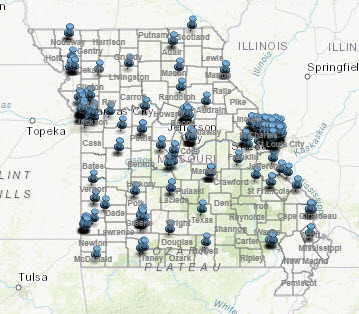

Primary Care Provider Map Instructions
Contact
Rural Health and Primary Care
Missouri Department of Health and Senior Services
PO Box 570
Jefferson City, MO 65102-0570
Phone: (573) 751-6441 or (toll-free) 800-891-7415
Fax: (573) 522-8146
Email: ORHPCinfo@health.mo.gov or
DHSS.LoanRepayment@health.mo.gov